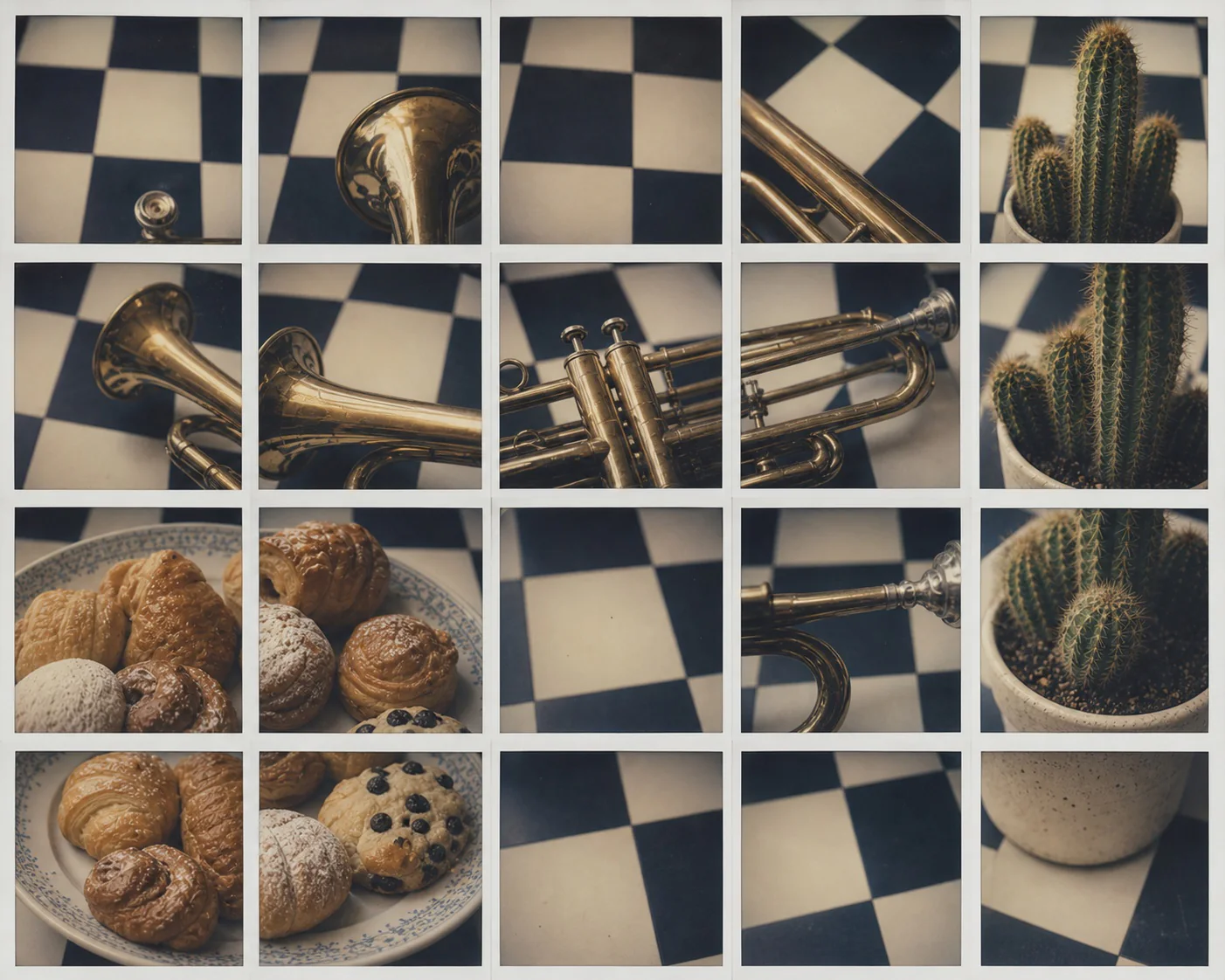
Trumpet, Cactus, and Pastries
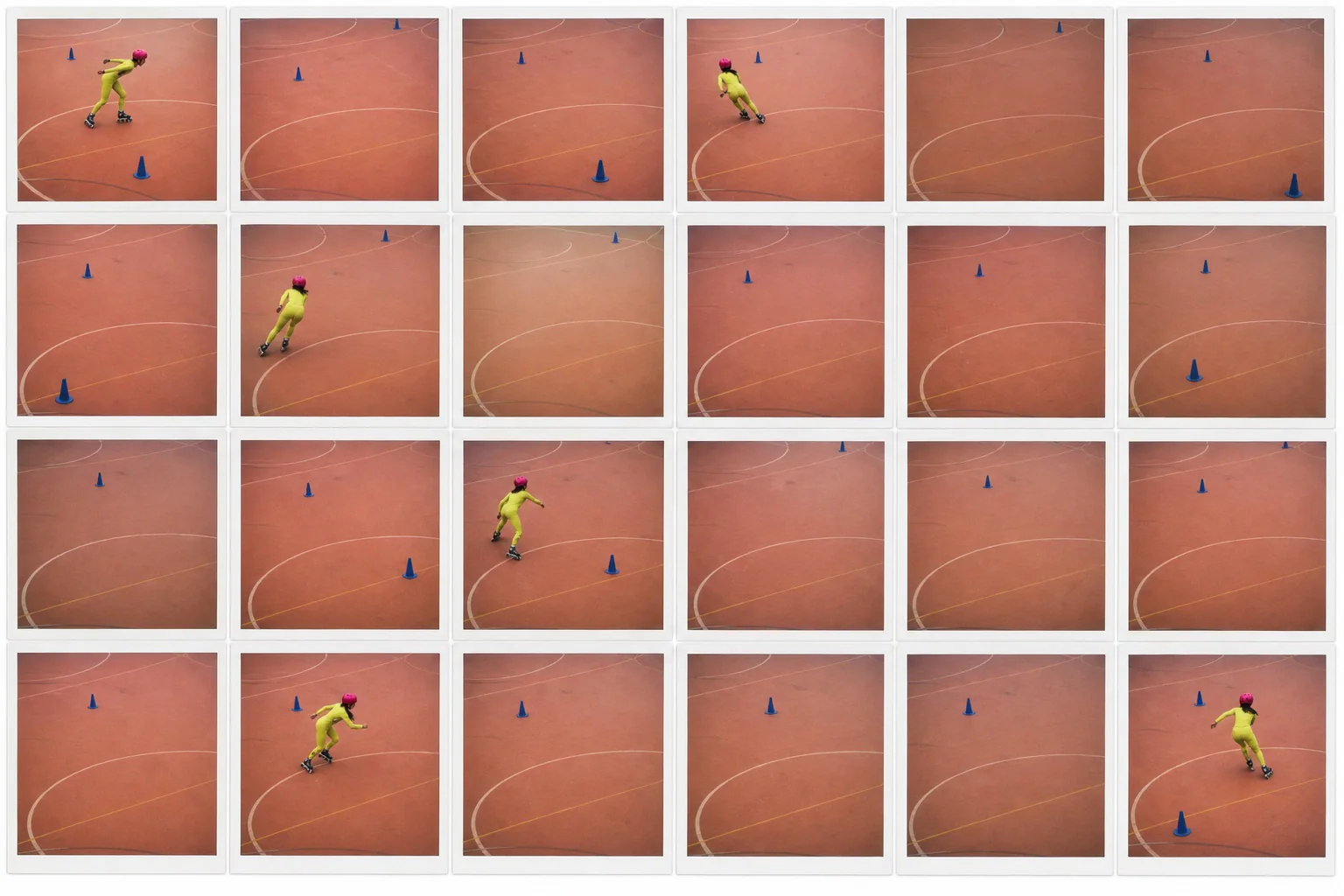
Slide across a fixed 5 × 4 lattice. Twenty square, white-bordered observations turn one still life into a map of looking.
Spatial photography / iPhone
Joinery guides you through a scene, remembers where every exposure was made, and composes the photographs without erasing their hard edges, changing viewpoints, or elapsed time.
In active development for LiDAR-equipped iPhone Pro.
Not a panorama
A panorama hides the evidence that many frames were made. A joiner keeps every photograph as a local observation.
Seams remain visible. People can recur. Light can drift. Space is reconstructed through attention instead of disguised as one synthetic camera view.
The field manual
Each score is a way to move, observe, and assemble—not a visual filter. The studies below teach what to hold steady, what to let change, and when a joiner is complete.
Slide across a fixed 5 × 4 lattice. Twenty square, white-bordered observations turn one still life into a map of looking.
Hold one elevated camera position for two complete 6 × 4 passes. Stable space becomes the clock while action moves through it.
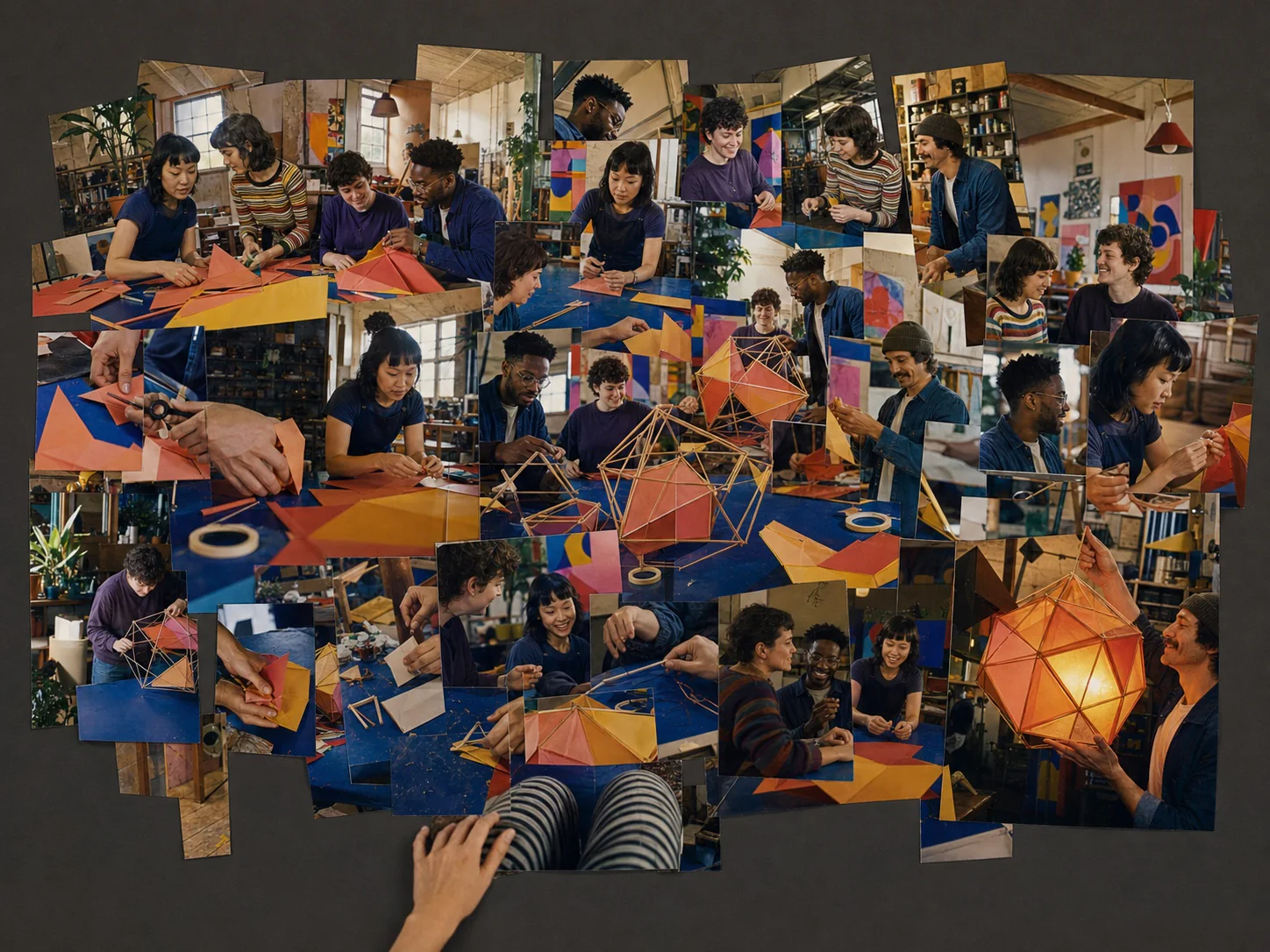
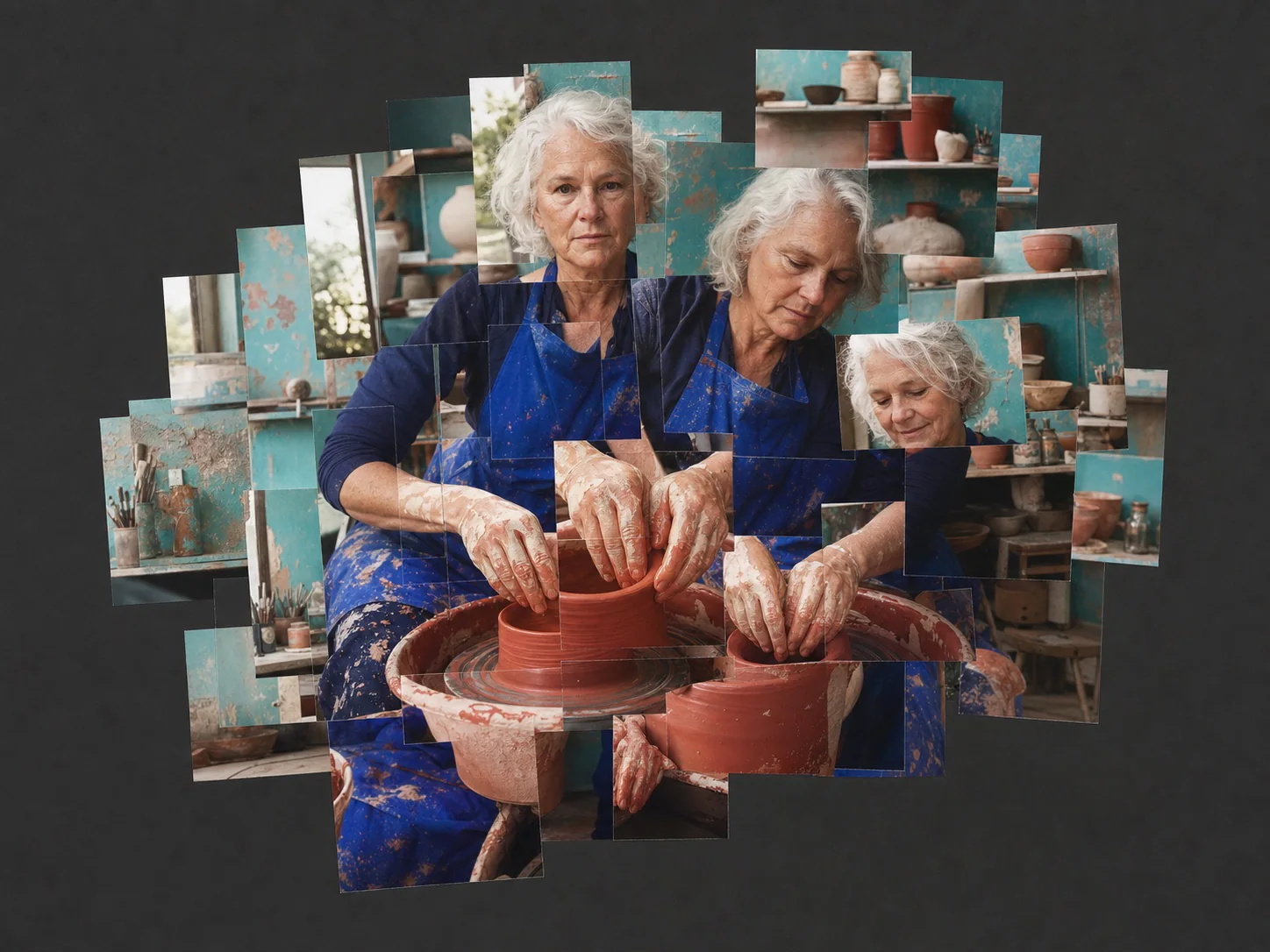
Build a person through repeated attention to face, hands, body, tools, and room. Return to the face as expression and posture change.
Photograph from inside the gathering. Gestures, glances, and the changing state of a shared object reveal social position and elapsed time.
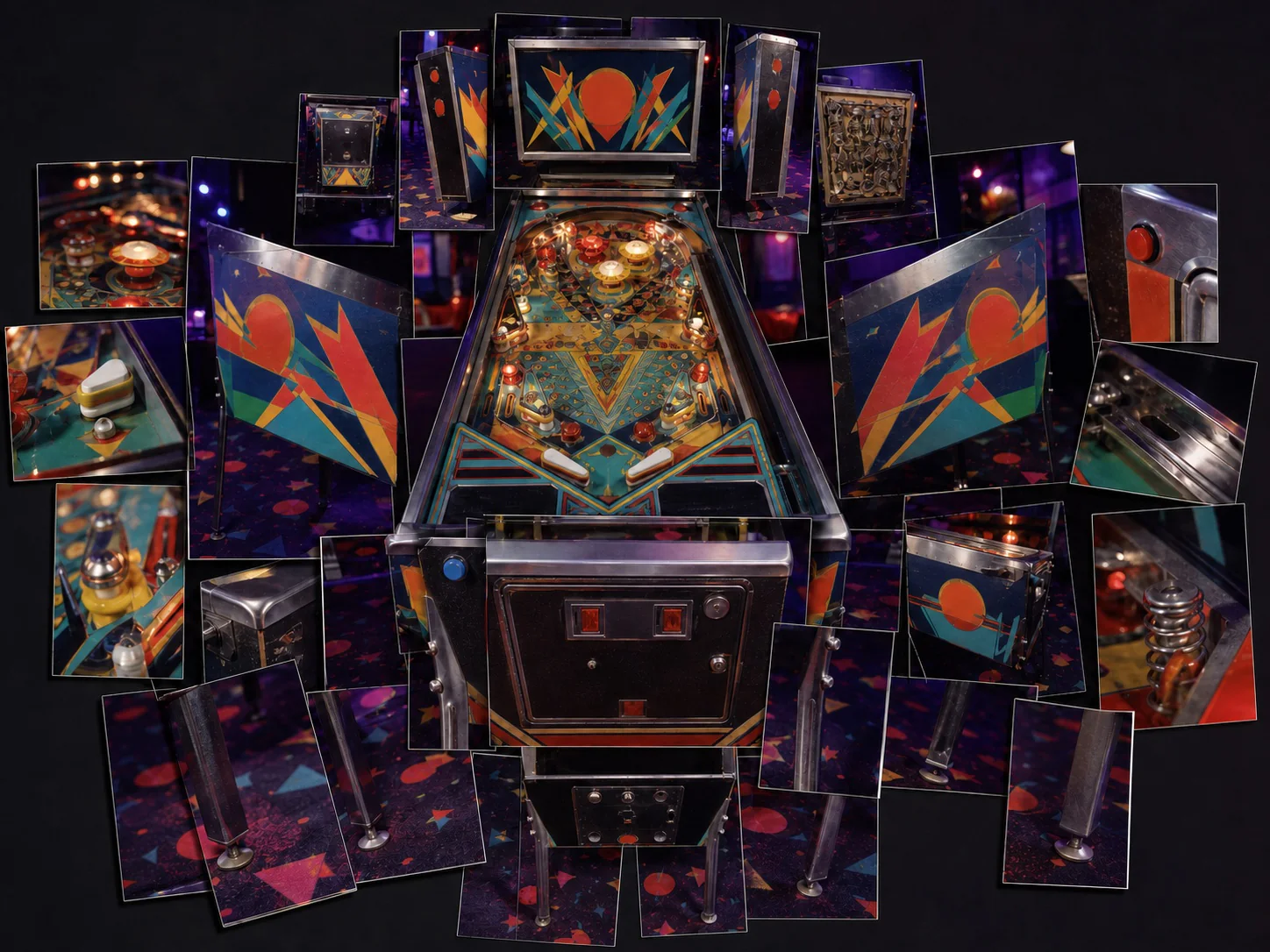
Circle an object through eight clockwise stations and sixteen prompted views. Add the plan, lower, and detail observations that honestly reveal it.
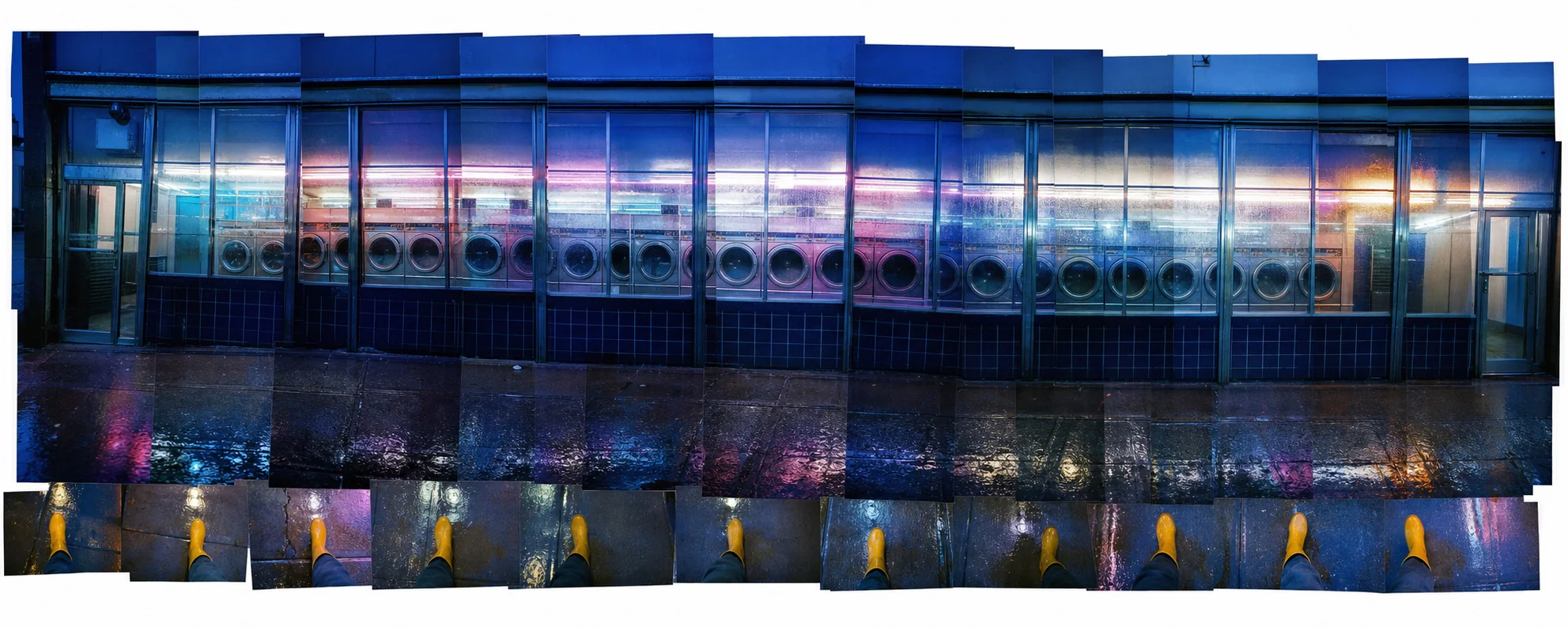
Swipe to follow the walk
Follow one route at a constant distance. A frontal chronology above and feet, puddles, and ground below turn walking distance into visible time.
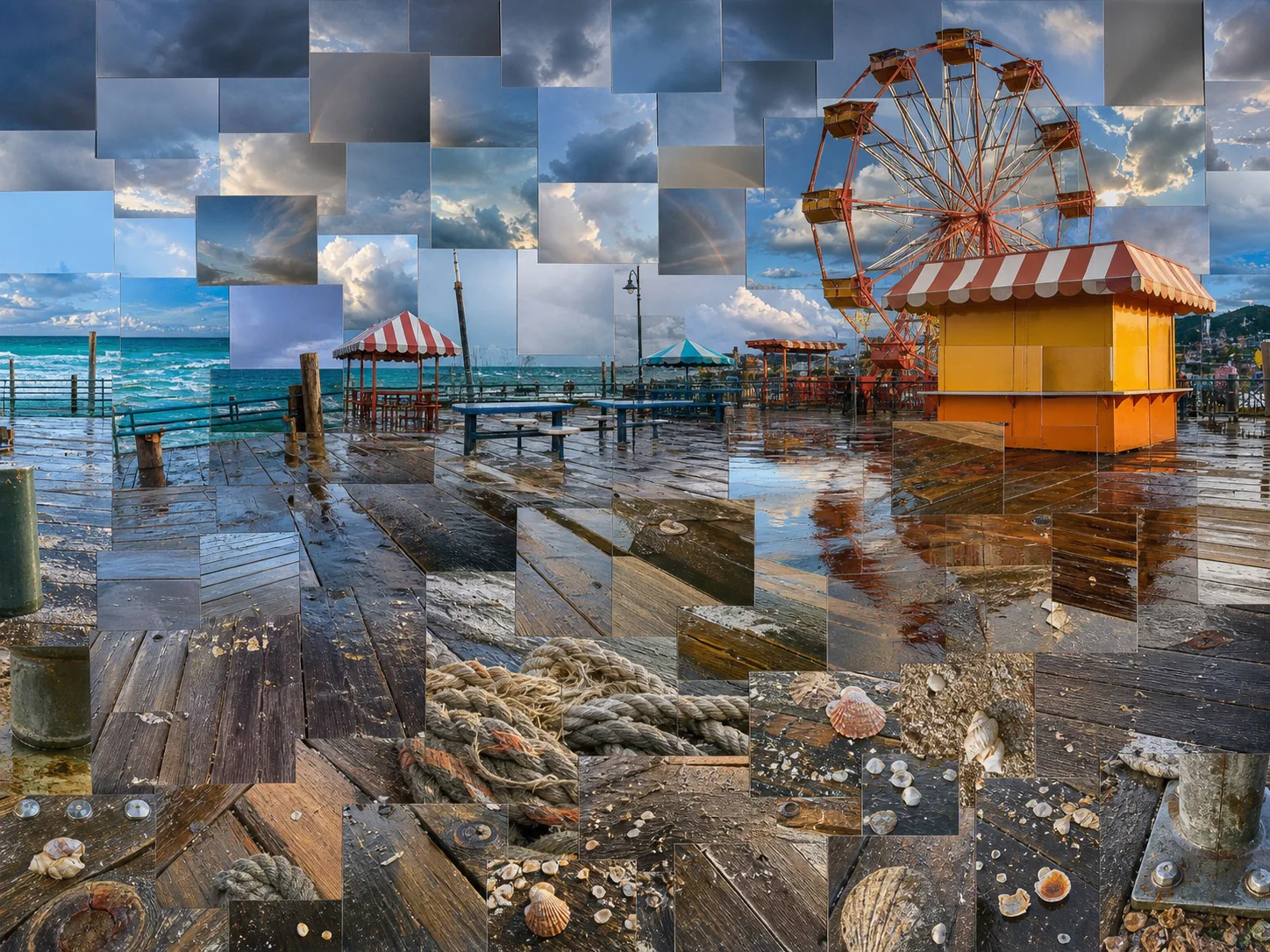
Roam through sky, horizon, landmarks, field, foreground, and close details. Scale follows importance and attention rather than one vanishing point.
From looking to joiner
Joinery turns spatial capture into a legible sequence. The guidance changes with the kind of picture you want to make.
Read its tutorial study, creative recipe, and Hold / Change / Align / Finish / Avoid field guide.
Freeze one wide reference, then tap the exact person, animal, object, or place the joiner is about.
Pose, depth, motion, visual cues, and haptics guide each observation without pretending the camera stood still.
Choose alternate moments, title the piece, and save or share a deterministic hard-edged composite.
Inside the camera
Built in SwiftUI around Apple’s spatial and imaging frameworks. The app records the evidence needed to compose each score; it does not run a seamless panorama stitch.
Bruce and Anthony visit LACMA
After a visit to LACMA, Bruce and Anthony were inspired by the possibility that a photograph could preserve many viewpoints and moments instead of reducing them to one. Joinery grew from that question: a camera for composing visible-tile photographs in space and time.
Independent homage
Joinery pays homage to the photographic joiner as explored by David Hockney: time, movement, attention, multiple viewpoints, and visible joins.
The imagery, tutorial studies, interface, writing, and iconography shown here were created for Joinery. No Hockney artwork or private research reproduction appears on this site or in the app.
Joinery is not affiliated with, endorsed by, sponsored by, or licensed by David Hockney, the David Hockney Foundation, LACMA, or Apple.
Now framing
The iPhone app is in active development and is not yet an App Store download. This is its current project home while the camera, field guidance, and physical capture workflow are refined.
Back to the beginning